Bringing home baby
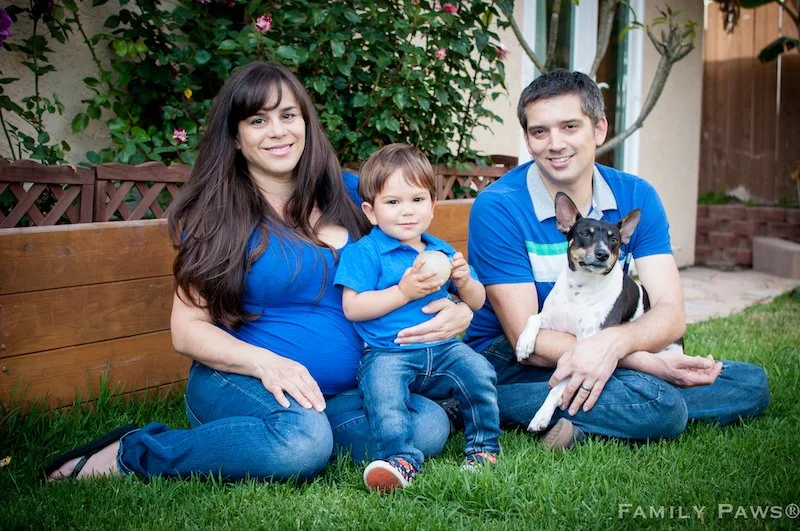
Or grandbaby … or nephew, niece, family friend … you get the idea
A quick guice to setting up your dog for success
I love getting an email like this:
“We’re having a baby soon! How should we introduce our dog and baby?”
Congratulations! … and spoiler: Despite what you might hear or see online, you don't actually need to "introduce" your dog to your new baby. Isn't that a relief? But you do need to prepare you dog for life with a baby, grandchild, extended family member, and so on. Here's a very brief guide on what to think about instead.
Safe separation and inclusion
Treat the baby's homecoming like any other novel experience — similar to how your dog would greet an adult stranger or a new pet. Your dog and baby don't need to physically interact to be "introduced." Letting your dog observe from a safe distance is a great start:
Outside, with your leashed dog and baby far enough apart that your dog can't jump on whoever is holding the baby.
Gating your dog in one room with treats and toys while you and the baby are in another.
Skip the sniff test
We no longer push a hand into a dog's face for sniffing — with their superior sense of smell, dogs can smell people just fine from a distance. Thrusting a baby toward a dog's face for a sniff can frighten both of them, and it's nerve-wracking for you too.
Better approach: spend several days (or more) working on calm behavior at a distance before letting your dog approach and sniff the baby's heel. A heel sniff beats a face or diaper-area sniff, in case the baby startles the dog with sudden movement or sound.
Start preparing your dog for life with a baby with a manners assessment … does your dog:
Know sit, down, stay, and loose-leash walking?
Come when called, regardless of distraction?
Jump on you at the door, or crowd you when you're carrying bundles?
Relax calmly in a crate or behind a gate?
Stay calm when separated from you, or get frantic?
Almost every dog needs a manners refresher at some point in their lives, and before baby arrives is an excellent impetus for brushing up those good behaviors.
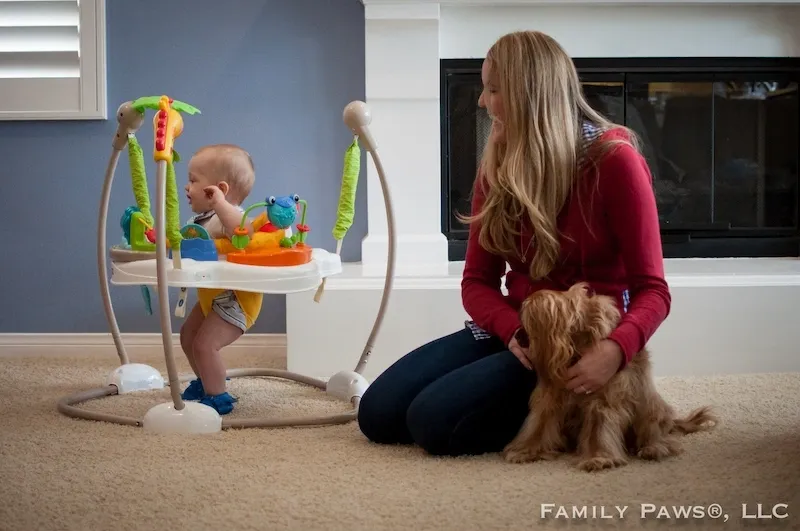
Your dog may just be fine when baby is in a bouncer, but no one likes surprises around their little one, so practice with baby gear near your dog before you use it.
note how the guardian is giving their dog cuddles so she feels included and safe.
Have slow intros to new gear that may worry your dog
Babies bring new equipment that moves, flashes, or makes noise. Does your dog:
Startle easily?
Shy away from new objects or sounds?
Lunge or bark at novel items?
Introduce your dog to these new items beforehand, paired with yummy treats.
Practice intros to visitors, deliveries, and houseguests … or devise a strategy to manage your dog so he feels safe
Friends and family will likely stop by or drop off meals. How does your dog handle new people in the home?
Figure this out well before the baby arrives — not while you're exhausted and stressed. Treat dog-prep as part of baby-prep, and you'll be way ahead of the game!