The 3 Rs of Rescue Dogs

Transitioning from a shelter into a caring home goes at your dog’s pace.
Relaxation is imperative! Read on to Find out why.
Many of my clients (and I myself) adopt rescued dogs, who may have an unknown or less than ideal previous life experience.
You may have heard of the “3-3-3 rule,” the idea is that it takes a dog 3 days to decompress, 3 weeks to learn routines, and 3 months to feel fully settled. I find it more helpful to frame this as the “3Rs of rescue dogs,” where your dog’s behavior, not a timeline, indicates how your new pal is doing in the home.
R #1: Relax
Rescued dogs may have had little time to rest/sleep. Give him plenty of space and time to rest: cozy beds, lots of downtime, and not introducing him to new people for a few weeks.
While dogs need exercise, there’s no need to take more than short strolls at the start. Save the hikes, swims, and long walks for when he’s more settled in.
Street dogs may be hypervigilant and find it hard to settle down for long; this is a survival skill from living outside.
Dogs from abusive or neglectful situations may be able to better rest in a cozy bed in a quiet, secluded place in your home.
An inability to rest is not a reflection of the love and care given by a shelter, rescue, or foster home — or by you.
“Relax” applies to you, as well! Give yourself time to get to know your new buddy, and resist the urge to jump in with both feet to training or socializing. Focus on the next two Rs as you get to know each other.
R #2: Relationships
Dogs, like us, are social creatures, which is why I find living with them so special. At the start of your time together, focus on building a trusting relationship with your dog.
Your household (including any other companion animals) and your new dog need time to learn about each other. Let your new dog approach you for cuddles and attention. Become a calm, safe presence for your dog and let her set the pace and make choices about togetherness.
Your hands can worry or frighten a rescued dog, as they may have been forcibly coerced into certain situations (even with the kindest intentions) such as being caught to be transported to a safe place.
Until you know your dog better, resist the urge to keep reaching for her. This goes double for young children.
It’s best if your hands are “quiet” at the start, not sticking in your dog’s face or always reaching to touch your dog.
The presence of you and other household members should predict good things like cuddles (if your dog enjoys physical contact at this time) and treats, which you may need to gently toss to your dog at first.
I know, you want everyone in your circle to meet your dog! Give her time to settle in both before inviting people over or taking your dog on extended outings. Building a relationship with the family first allows your dog to rest and relax, as well as build the next “R,” Routines.
R #3: Routines
Dogs are masters of creating patterns. In fact, pattern creation is a survival skill for all species, one that fosters a feeling of safety. You, I, and our dogs all quickly figure out that when X happens, it’s reliably followed by Y.
For most dogs, this will mean excitement when you pick up the leash, for instance, because a fun walk invariably follows.
When you go into the kitchen, tantalizing aromas can appear or you might drop something while cooking, so that’s a pattern worth noticing as well.
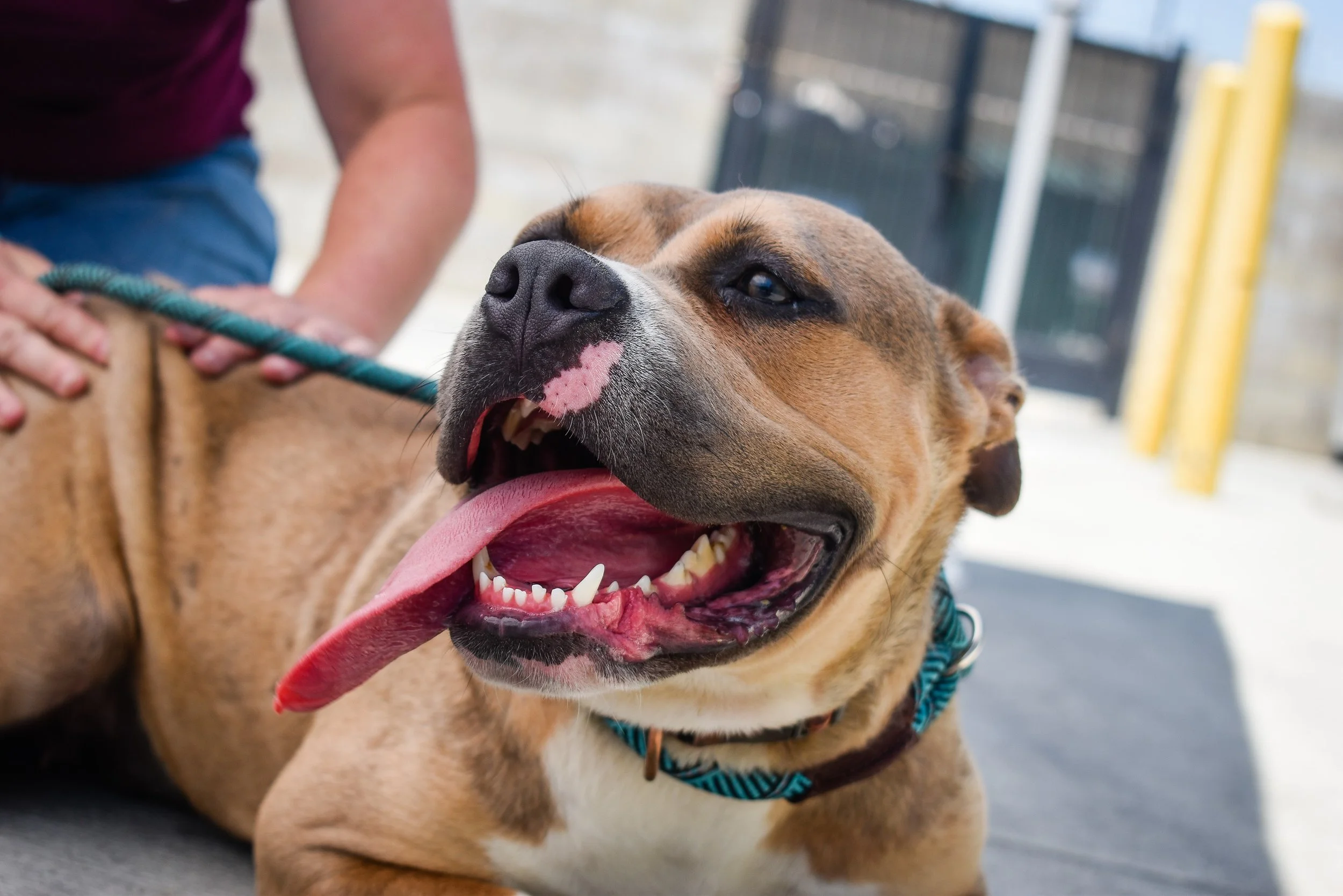
Routines = predictable patterns = a well-deserved feeling of safety for your beloved new rescue dog.
Implement routines for house-training, mealtime, what your dog can and cannot chew, exercise, and alone-time. Have them eat in the same place, and leave them alone while eating.
Easy enrichment feeding such as slow-feeder bowls, kibble tosses in the yard, lick mats, and snuffle mats are helpful enhancements to your dog’s eating routine.
What about training?
While there’s no rush, it’s always a good idea to do manners training with a new dog of any age. Manners help you communicate behavioral expectations with your dog and teach them the skills to live happily in your home.
If there are children or grandchildren in the home, a trainer who specializes in children and dogs can set you up for safety and family fun.
When to get help
Behavioral setbacks are normal. If your rescued dog is having behavioral struggles or difficulty settling in after a month or so, contact a credentialed, rewards-based trainer for help.