Tips from Top Trainers
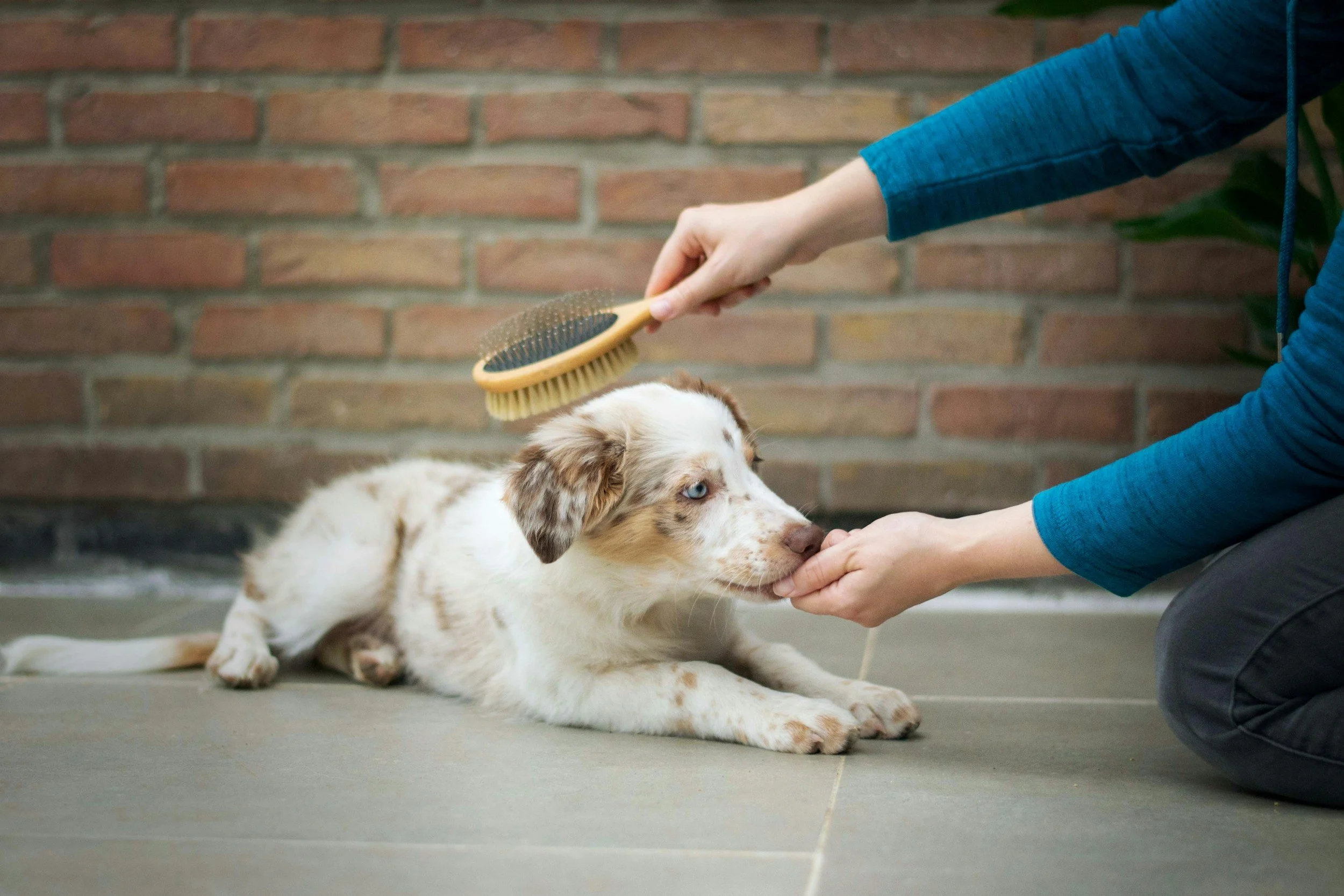
This puppo is learning that resting calmly during brushing predicts very yummy things happening.
Positive reinforcement at its finest!
One of the reasons I’m so proud to be a graduate of the Academy for Dog Trainers is the tireless work both individual graduates and The Academy itself do to promote rewards-based training that is grounded in the science of applied animal behavior.
We post on social media, write for local news outlets, partner with shelters and rescues, and communicate with countless clients about the effectiveness of modern, rewards-based training methods, as well as share our own favorite training tips. I’ve rounded up some of my colleagues’ best tips for you below.
My own favorite training tip
Dogs “talk” with their bodies. Learning your own dog’s body language lets you know if she’s happy, terrified, or anywhere in between. Understanding how to read her emotional state will help you train your dog more effectively, keep your dog and family safe, and quite possibly avoid behavior problems before they spiral out of control.
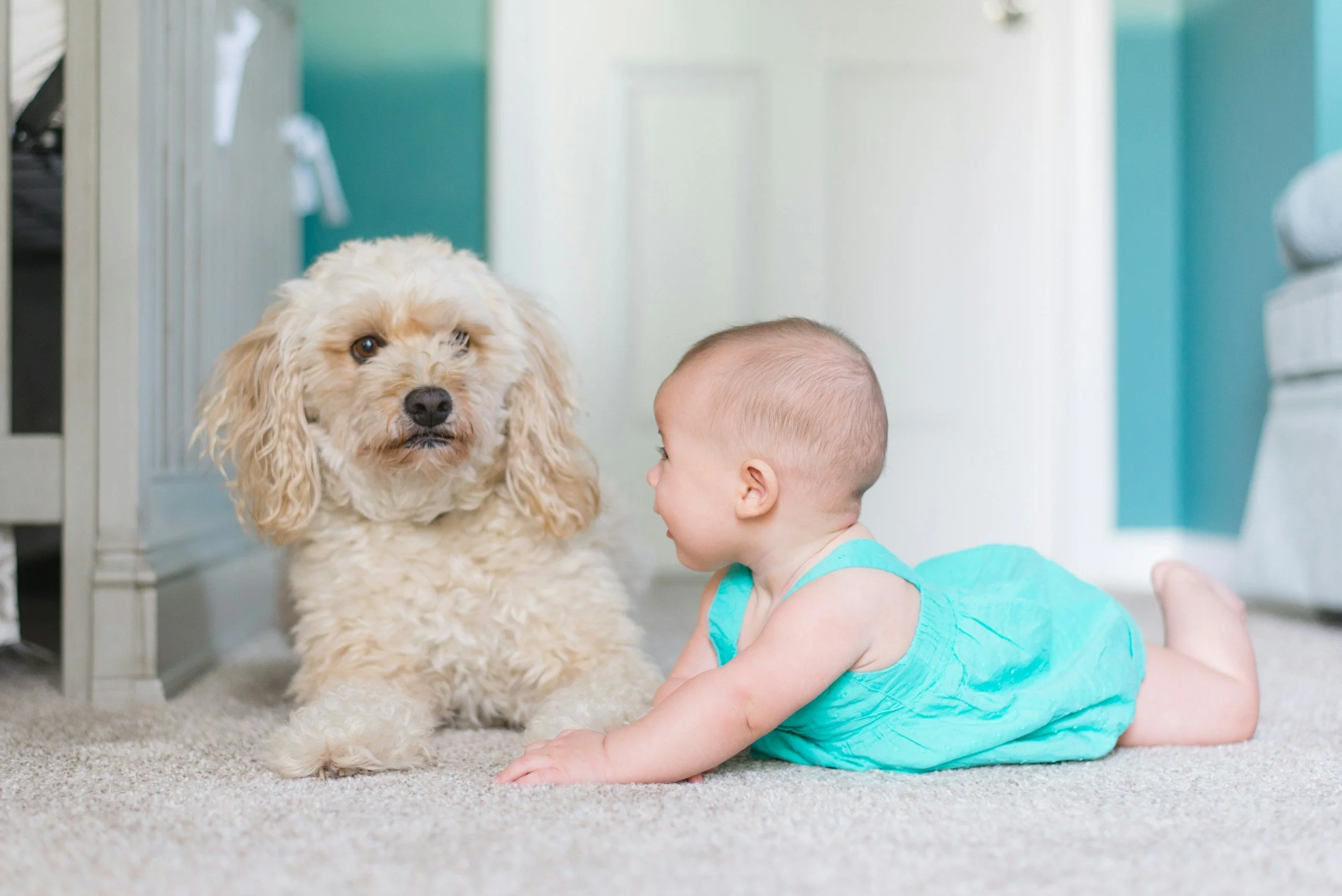
Body Language Alert: This dog is very, very worried about the nearness of the baby and does not feel safe.
There are multiple body language indications, such as the dog’s body shifted away from the baby, pulling her head back, staring hard at the baby, and a tightly closed mouth.
Dogs have a threshold of being in an uncomfortable situation, just as we do, and tend to respond with growls, snaps, and bites to make the scary thing move away.
As you browse through my colleagues’ tips you’ll notice the themes of safety (for you and your dog), kindness, reinforcing desirable behavior, and using food rewards.
The top tips from my peerless colleagues:
Erin Maloney of Raising Pawtential: If you’re struggling with any behaviors with your dog, check that their basic needs are being met, especially exercise and mental stimulation. Many frustrating behaviors stem from boredom and pent-up energy. Get them moving for at least an hour every day and use food toys to feed all meals if possible.
Allison Lamminen of Delighted Dogs: Reinforce what you find desirable even if you didn’t ask for the behavior. The more we say “thank you” the less we find ourselves saying “no” and getting frustrated. Reinforcing desirable behaviors opportunistically can help to prevent undesirable behaviors from developing.
Hannah Thiemann of Always Learning Dog Training: Build your village! Loving an anxious, fearful, or reactive dog can be an emotional roller coaster, and you'll need moral support and cheerleading before the journey's end!
Saundra Clow of Alpine Dogs: If I could give one tip to all dog guardians, it would be to focus on ensuring, above everything else, that their dog feels safe.
Carolyn Allen of The Dog Evolved: My favorite tip is to remember Management! Sometimes it can be the entire solution (and also, it's okay to comfort your scared dog.)
Kristy Francis of Kristy Francis Dog Training: Dogs do what works for them. If you like something your dog is doing, reward it. They will be more likely to repeat that behavior again. The more you reward it, the more reliable it will become.
Allie Kirby of Sky’s the Limit Animal Training and Behavior: Don’t get caught up worrying about perfection! Enjoy the process, learn to laugh with your dog, and love them for who they are, just as they do for you.
Claudine Prud’homme of The Learned Dog: Please don’t hesitate to reassure your fearful/anxious dog! It will NOT make him/her more anxious and to the contrary, by helping him/her cope with the panic, you will only make it easier on both of you.
Nina Esmery of A Lick of Sense and Ivy League Dogs: It is okay to take a day off in training! Protect your patience and your motivation, manage the situation for today, and you can pick it up tomorrow. A training session with an exhausted trainer is very likely to go badly anyway: set your dog and yourself up for success and avoid the problem for today!
Trystan Stark of Stark Dog Training: Veterinary care doesn’t need to be scary! If your dog is worried about going to the vet or any other care, a Fear Free vet and/ or trainer can help! Cooperative care can teach your dog to not only tolerate husbandry procedures but to be active, willing, participants.
Laura Witkowski of Good Wolff: Every lucky dog gets to be a senior, so teach them skills they might need when they are older NOW while it’s easy for them. Things like going up/down a ramp, being picked up/assisted into/out of a car, and LOVING THE VET!
Jane Wolff of Good Wolff: Let your dog be a dog and laugh at their doggy-ness. They are completely ridiculous sometimes and that’s where I always find the more joy. Be your dog’s best friend and laugh together.
Kate LaSala of Rescued By Training: Do whatever you need to in order to keep your dog feeling safe. Your dog feeling safe and knowing you won’t put them into scary situations will result in you both having better lives.
Molly Obert of Underdog Training and Consulting: Make it rain chicken from the sky. Many challenges we face with our dogs can easily be managed by simply having them on the other side of a baby gate or Xpen. Show your dog that each time she is alone in a certain area, it randomly rains her favorite snack from the sky. Soon she'll be happily awaiting the next cheese shower while you cook, answer the door, hang with the cat, play with your kids, etc.
Kristi Benson of Kristi Benson Dog Training: Use a memory aid to help yourself get into the habit of bringing food on walks! If you often forget to bring snacks, put a sticky note where you have waste bags or turn your coat inside out, or come up with something that will jog your memory to grab those delicious food rewards from the fridge before you go a-walking.
Jody Karow, Go Anywhere Dog: Be your puppy's hero always! When you predict safety, connection and support, you’ll be well on your way to a Go Anywhere Dog.

And finally, from our teacher and mentor Jean Donaldson, Founder of The Academy for Dog Trainers:
My favorite dog training tip is to gladly and gleefully use plenty of food.