Ouch! Those sharp teeth can hurt!
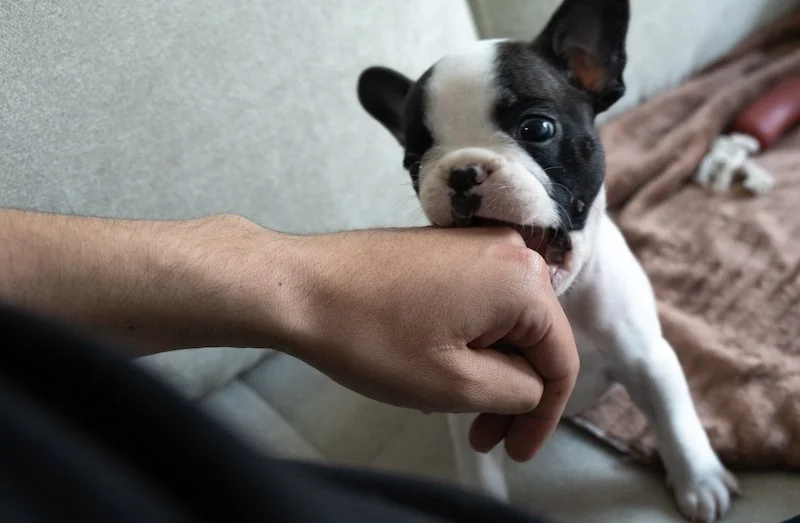
Puppies nip for several reasons, and nipping should actually be encouraged.
Read on to find out about how to manage nipping and stop your arms, legs, and hands from becoming your pup’s chew toys.
What is puppy nipping?
Nipping is more accurately called “play-biting.” Puppies do it to other puppies, to adult dogs who’ll let them, and to humans.
They’re exploring their world with their mouths and learning how to be adult dogs.
It’s important to distinguish this constant biting from aggressive behavior, where a dog threatens or bites when guarding his food, when uncomfortable about someone touching him, or when uncomfortable about strangers coming too close.
Why puppies play-bite
Play-biting is a puppy’s main activity, aside from eating and sleeping, and has to do with their ancestry as social carnivores. Wolves and wild dogs are equipped to bring down large prey animals and so must have extremely strong jaws.
Living in close situations as they do, wolves and wild dogs have arguments and competition over food, resting places, and mates. During these day-to-day scuffles it’s vitally important that wolves and wild dogs not use their full jaw strength on each other the way they do on their prey.
Instead, they use ritualized aggression — threats, body postures and inhibited bites — to settle arguments.
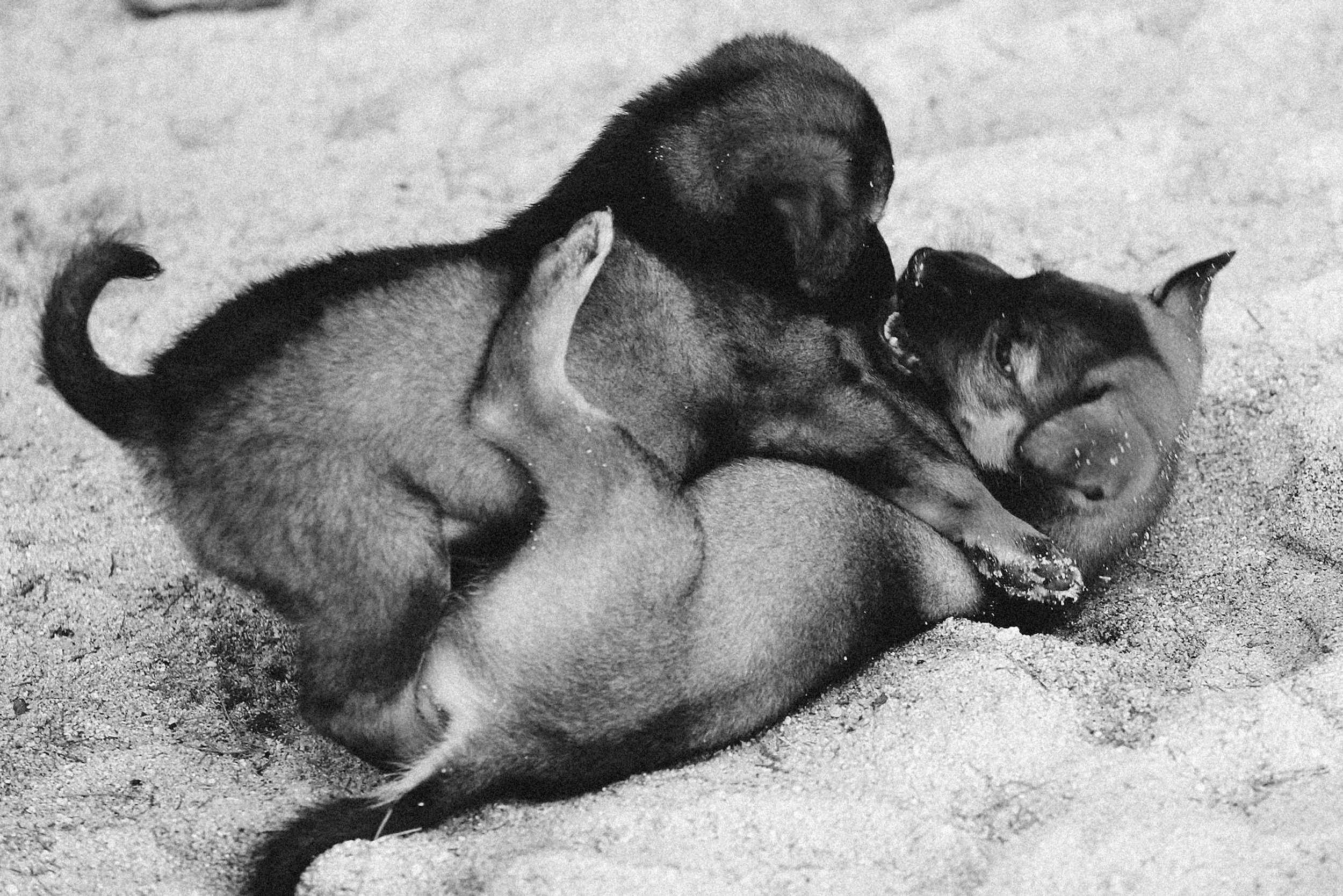
Puppies play-bite so they can learn about their jaw strength. When one puppy bites another too hard with those needle-sharp teeth, playtime grinds to a halt.
The cessation of play is a potent consequence to the biting puppy. Over time, the bites become consistently gentler in order to keep play going.
If they don’t get this constant feedback about their jaw pressure, puppies are at high risk to grow up without acquiring the capacity to inhibit the force of their jaws.
One unfortunate consequence is that such an adult dog may never be safe to play with other dogs, as she never learned to manage her bite strength.
It’s almost impossible to teach appropriate bite strength to an adult dog. A dog who cannot manage the strength of her bite may not be safe in a family with children.
What to do about play-biting
The best policy for people with young puppies (age 6 - 16 weeks) is to allow play-biting. Hard bites should result in you walking away from and ignoring the pup for a few moments. Ensure the pup is safe and can’t follow you — for instance, briefly step into a bathroom or closet and close the door.
Actively supervise a puppy with children. A child may squeal or shriek when play-bitten and this can cause the puppy to bite again in excitement, the exact opposite of what you want to happen.
Only when the puppy has gotten reliable about biting more softly should play-biting be phased out altogether. You can do this by redirecting the puppy to toys and giving consequences for all bites.
This way, the dog has a much better chance of growing up with good bite inhibition. Free play with other puppies and puppy-friendly adult dogs is another good forum for puppies to develop bite inhibition.
What doesn’t help and might even harm
Many dogs, our own Petey for instance, will continue to chew through preparations such as anti-chew spray or Tabasco. Squirting your dog with water to “interrupt” the chewing can have the very unfortunate side effect of teaching your puppy or dog to fear your approach and run and hide from you or try to scare you away by barking and lunging. Don’t do it. Yelling “No!” is a natural impulse to finding your pup shredding your handbag but, again, can frighten your pup or dog and doesn’t give her info on what she should do instead.
Tapping your pup’s nose with your hand or even squeezing their muzzle shut can also have fear-filled, long-lasting consequences that can take a trainer like me months of work to undo.
Chewing prevention for the win
Chewing, like play-biting, is normal puppy behavior. Puppies need positive and humane management and guidance to learn what is appropriate to chew.
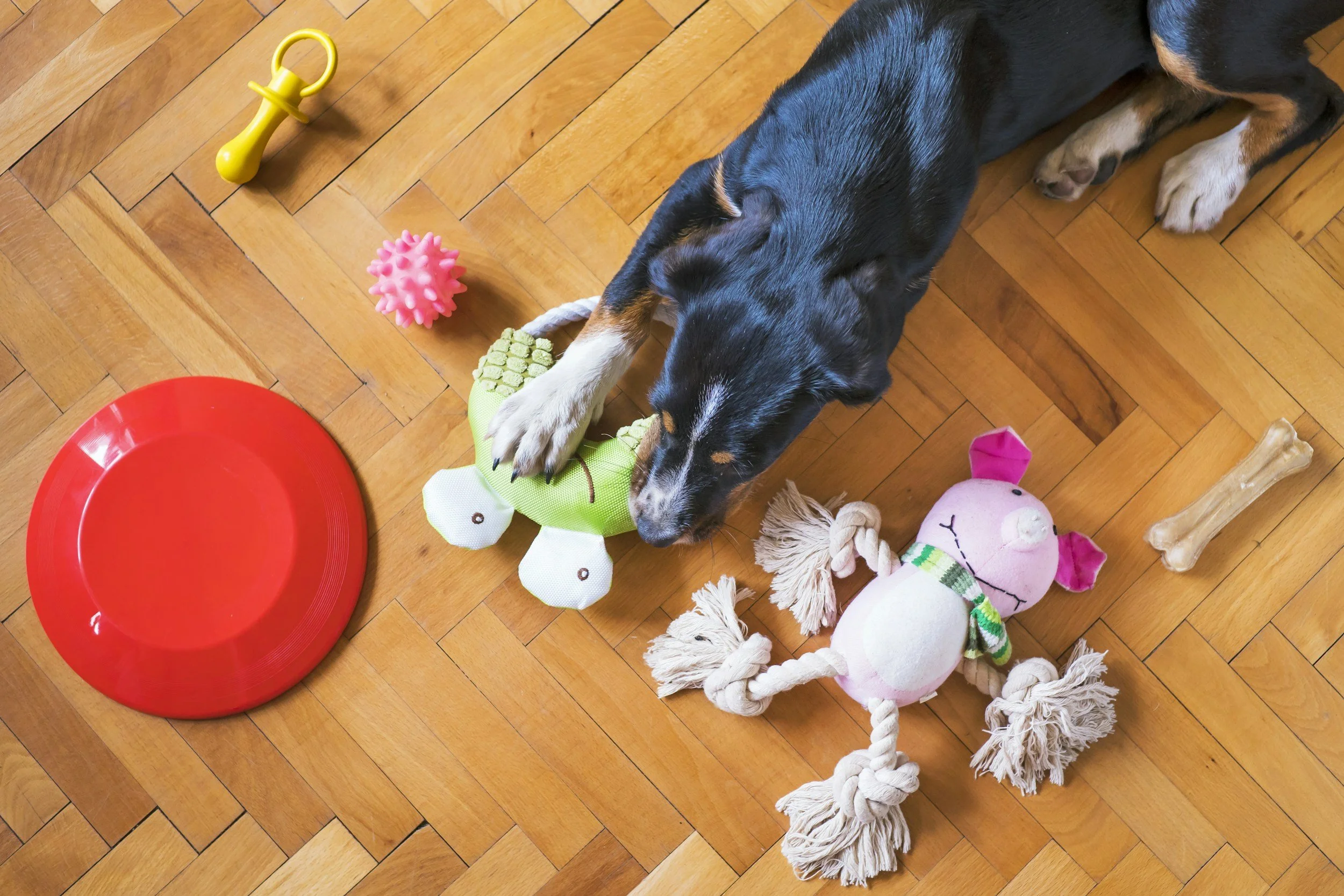
Ensure your puppy and New adult dog have plenty of items they can chew. Help your dog get it right by having a variety of chew toys — she will have preferences!
Your dog doesn’t know that their toys scattered on the floor are OK to chew while the sofa legs, your shoes, and the rug are not. Actively help them make good choices with patience, kindness, and praise.
Redirect your pup kindly, with a gentle “Hey! Let’s go get your chewie!” as she puts her mouth on the remote control. Praise her for engaging with her chewie.
Chew-training applies to new adult dogs, who won’t know what’s “legal” for them to chew in their new home.
Confine any puppy or untrained dog to one room, like the kitchen, to make dog-proofing easier. Give her appropriate chewies so the baseboards don’t become the chew object.
You can also keep your dog tethered to you by a leash in the house so you can interrupt her thoughts about chewing or taking indoor bathroom breaks.
Tired dogs can be better-behaved dogs
Burn off your dog’s energy, both physical and mental. Your puppy should be socialized in a rewards-based puppy class or by doing socialization exercises with you.
When she’s a older, enroll in a rewards-based, positive-reinforcement training program.
Have daily 5-minute practices of basic behaviors, play fetch, tug and hide & seek with his toys, get him out daily for sniffaris (leashed walks where your pup can follow his nose), trail hikes, and runs, and give him playtime with other dogs.
If you work long hours, consider a dog-walker or day-care. This way you come home to a happy, tired dog.