Secrets of a Pro Dog Trainer
Why do credentialed, rewards-based trainers like me get lasting results?
Read on for my secrets!
Those of you who don’t live in Windham County, Vermont, may not know that I’m a regular columnist for the local paper, the Brattleboro Reformer.
That column is called, unsurprisingly, “Secrets of a Pro Dog Trainer.” I write about animal behavior, modern training methods, safety and behavioral management, enrichment, and more.
So I thought a blog for you about the Secrets of a Pro Dog Trainer is overdue. Herewith, my top secrets:
Working to a training plan

A training plan is like a roadmap: You don’t know how to get somewhere without knowing where you’re starting from.
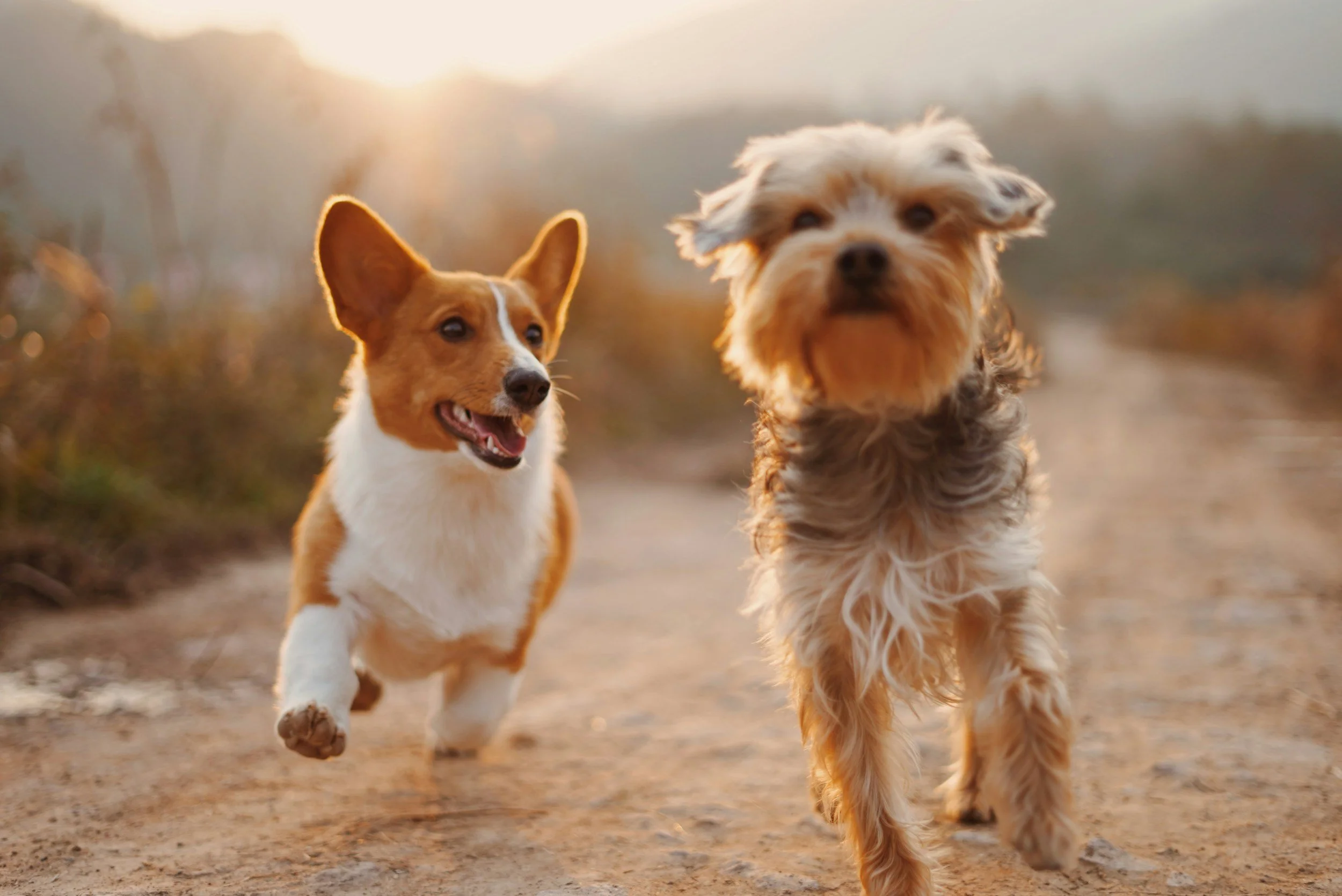
Photo by Vitaly Gariev on Unsplash
I don’t just show up at your house and start training. I assess what your dog knows how to do, discuss your goals, and create plans. For many people I work with, they want to have the dog politely greet visitors to the house rather than jump on everyone. We would likely start by teaching the dog an alternative to jumping, such as touching an outstretched hand and sitting. But first, we might need to teach your dog to sit. Then we work to an incremental training that gets more challenging as the dog aces increasingly difficult iterations of the behavior.
Timing is everything
At the Academy for Dog Trainers, we like to say we don’t take coffee breaks while working with dogs. When I work with clients, training is fast-paced, for efficiency and so we can get through multiple behaviors in a session, and also because research shows that short sessions are just as effective as longer ones.
We work quickly because our goal is to keep the dog in what I call the “Goldilocks zone” of being reinforced (given a food reward) 8 - 12 times every minute. That’s fast training, and it keeps the dog engaged.
We also don’t knock out 30 repetitions in a row. We wait until the dog performs any given behavior 5 times in a row correctly, then move on. If the dog struggles to learn a behavior we drop back to an easier step in the training plan, practice until the dog has aced it, then move ahead again.
Timing also comes into play with a dog who has Very Big Feelings about things. For instance, when teaching a dog that something scary in the distance actually predicts something very good for them, we time our food rewards to start flowing the moment the dog (not you) notices something that normally worries them.
Reinforcement drives behavior
If left to her own devices, a dog always has a behavior that they find more reinforcing in that moment (i.e., there is always something they’d prefer to do) - swimming vs. hiking, sniffing vs. walking, chasing a critter vs. napping, and so on. During training, we identify what a dog finds most reinforcing and 99.9% of the time, it’s an amazing food reward.
We then narrow it down to food rewards the dog herself prefers: for some that might be freeze-dried cod, for others, warm hotdogs or diced Asiago.
For more on this, see last month's blog on dogs working harder for their preferred rewards.
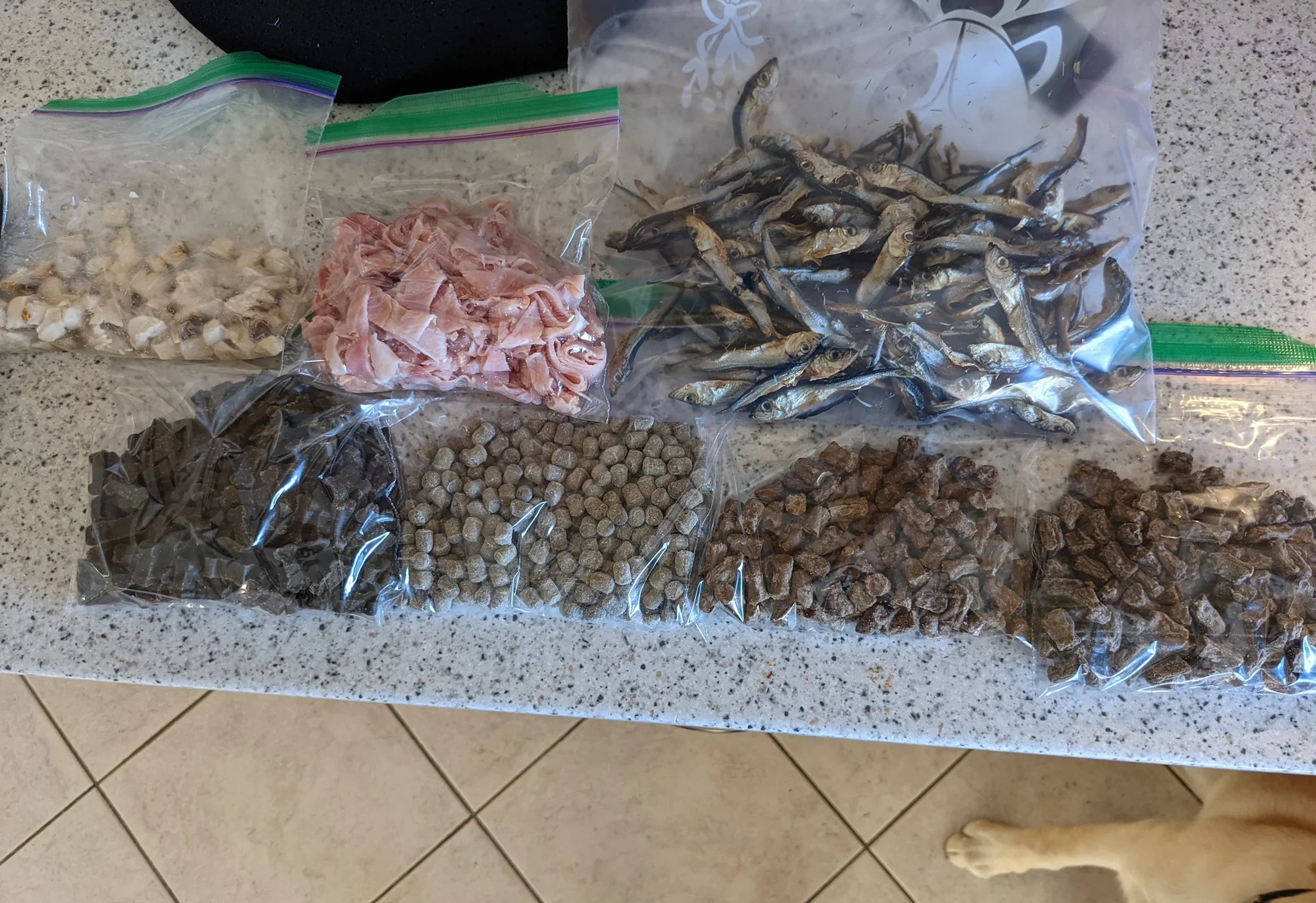
Now we’re talking Preferred rewards: diced chicken breast, chopped deli ham, freeze dried minnows, tripe kibble, diced dog treat meat logs, and super-fancy coated kibble.
Photo courtesy of my colleague Ruby Beish.
Celebrating goofs
Dogs aren’t perfect, trainers aren’t perfect and I don’t expect you to be, either. I occasionally forget what cue we’re working on, or I drop treats (which the dog eagerly grabs), or have accidentally rewarded the dog when he hasn’t quite done the behavior we’re working on. As my teacher Jean Donaldson says, with consistent, professional, rewards-based training, it all comes out in the wash.
Work to a plan, ace your timing and generously dole out those preferred rewards, and there you have it: The Secrets of a Pro Dog Trainer!